Mobile Strike
- 3.3
- Rating
- 50.00M
- Installs
- Free
- Price

 Analysis by App-foxy
I approached Mobile Strike as a decision rather than a quick download: is this the right strategy game for someone who wants a persistent military world, or would a simpler alternative be a better use of time? After spending time with it, my answer is fairly clear. This is a large-scale mobile strategy experience built around long-term participation, coordination, and the feeling that your base is part of a much bigger conflict. It is not the kind of game I would recommend to everyone, but it can work well for players who enjoy planning around timers, checking progress regularly, and working with a group.
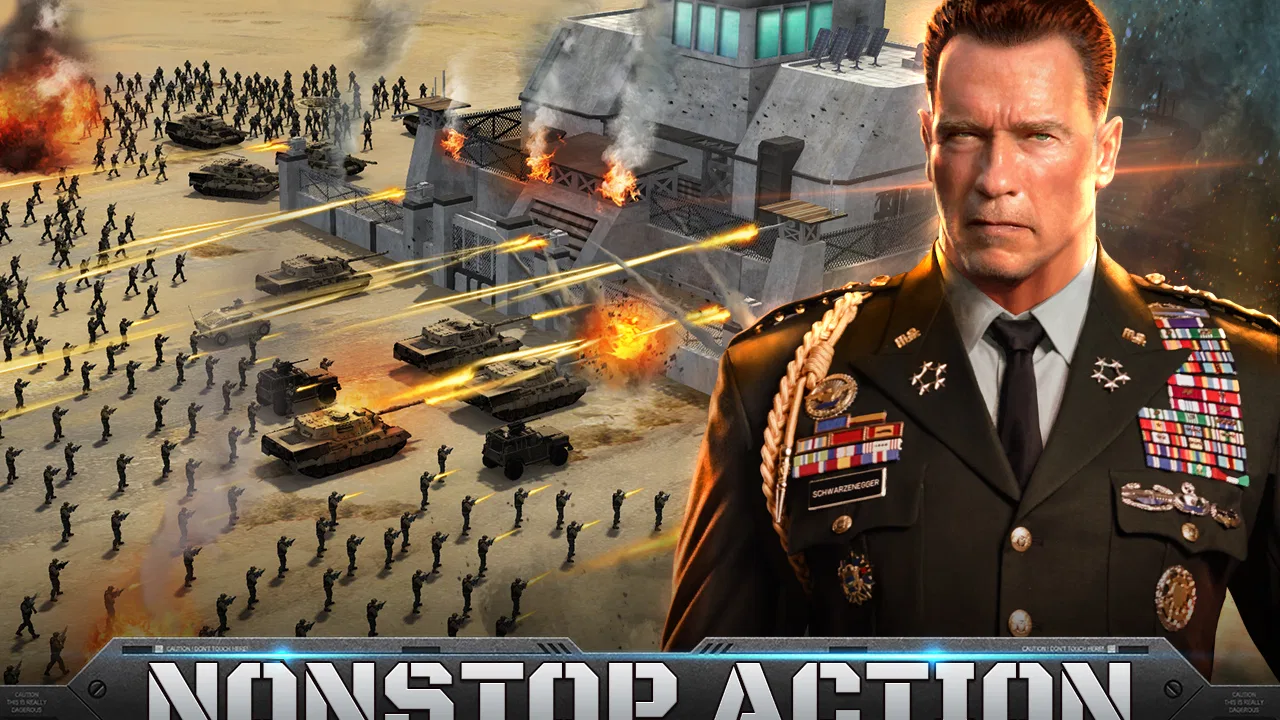
The game comes from Epic War and is free to start. Its store positioning presents it as an MMO centered on an action-hero theme, with Arnold Schwarzenegger as the recognizable face of the experience. That personality gives the presentation a louder, more theatrical tone than a quiet kingdom simulator. At the same time, the underlying appeal is familiar to anyone who has played a persistent strategy game: build up, research, prepare forces, watch the wider map, and decide when to spend resources or wait.
It has been available since November 5, 2015, and its long presence is reflected in its broad audience: over 50 million installs, about 864 thousand ratings, and roughly 62 thousand written reviews. The average rating is 3.3, which tells me to approach it with realistic expectations. There is clearly a substantial player base, but popularity alone does not make the experience comfortable for every newcomer.
You May Also Like

 Pandora - Music & Podcasts
Pandora’s Music Is Easy to Start, but Harder to Recover
Pandora’s strength is its low-effort path from a seed to a station. Its weak spot is how much confidence it asks you to place in connection, setup, and quiet recovery.

 8 Ball Pool
 Is Built on Rivalries, Rematches, and Routine
A close look at the rivalries, rematches, shared routines, and unanswered safety questions that turn a quick pool match into a persistent mobile community.

 Samsung Music
’s Quiet Strength Is Playing What You Already Own
Its reach comes less from spectacle than from dependable access to a personal library. That simplicity is both the app’s strongest retention engine and its ceiling.

 AccuWeather: Weather Radar
AccuWeather Review: A Quick, Clear Forecast for Everyday Decisions
For everyday plans, the best forecast is the one you can understand quickly. AccuWeather makes rain timing, radar, and local conditions easy to act on, with a few trade-offs.

 Hill Climb Racing
Why Hill Climb Racing Still Turns Crashes Into One More Run
A tiny car, a bumpy hill and one more upgrade: Hill Climb Racing keeps resurfacing because its simple chaos makes every near-miss feel personal.

 AliExpress - Shopping App
AliExpress Makes Global Shopping Feel Personal, but Shoppers Bear the Risk
AliExpress turns a global marketplace into a pocket-sized discovery engine. Its reach is useful, its shopping loop compelling, and its trade-offs easy to miss.
More From Our News Desk
View All News


How I would decide whether Mobile Strike fits
My first question would be how much attention you want to give a game between active sessions. If you want a strategy title that can be opened for a short burst, completed, and put away without much thought, this is probably not the best match. Its appeal comes from returning to an evolving base and making choices that matter over time. Even when I was not actively playing, the next decision was often already in my mind: improve the economy, strengthen the army, advance research, or save resources for a more important objective.
That makes the game better suited to players who enjoy long-term planning than to people looking for a quick tactical puzzle. A traditional turn-based strategy game usually gives me a defined scenario, a clear beginning, and a satisfying conclusion. Mobile Strike instead asks me to live with an ongoing system. The reward is continuity, but the trade-off is that progress can feel slower and less dramatic from one session to the next.
I would also consider your tolerance for social pressure. A persistent MMO strategy game is rarely only about personal optimization. Alliances, shared objectives, communication, and the behavior of other players can shape the experience. That can be exciting when a group is active and welcoming. It can also make the game feel demanding if you prefer to play entirely alone or at your own pace.
The age rating is Everyone 10+, which makes the game broadly approachable from an age-classification perspective. Still, I would not confuse that with a relaxed, childlike experience. The military theme, competitive structure, and ongoing progression are aimed at people who are comfortable with conflict and resource management. For a younger player, I would pay particular attention to the presence of optional purchases and the pressure that can come from wanting to keep pace with others.
The central loop rewards patience more than reflexes
What stood out to me is that the game is less about fast controls and more about sequencing decisions. I had to think about what should happen first, what could wait, and whether a short-term improvement would interfere with a larger plan. That is where the strategy lives. The game can look action-oriented because of its theme and presentation, but the important skill is usually not reaction speed. It is managing attention across several competing priorities.
A useful habit is to decide on one main objective before opening the game. For example, I might focus on improving the base, preparing for a military goal, or making progress through research rather than tapping through every available option. This prevents the interface from turning the session into a checklist without a purpose. It also makes the slower parts feel more intentional.
Another practical tip is to treat resources as a planning problem rather than as something to spend immediately. Early improvements can feel satisfying, but saving for a meaningful upgrade may produce more value than scattering small investments across several areas. I found that this mindset matters especially when the game presents multiple tempting paths at once.
The third insight is that regularity matters more than marathon sessions. A player who checks in with a simple plan can often get more from the structure than someone who opens the game only occasionally and tries to catch up in one long sitting. That does not mean the game requires constant attention, but it does mean that its design favors a steady relationship with the account.
Why the large-world format can be compelling
The strongest part of the experience is the sense that my base is not an isolated menu. The broader MMO framing gives decisions more context. Progress feels connected to a world where other players are also developing, competing, and organizing. Even when I was concentrating on my own improvements, the possibility of wider interaction gave those choices more weight.
This is where the title stands apart from many single-player strategy alternatives. A solo game can offer cleaner balance and a more controlled pace, but it cannot create the same feeling of belonging to a continuing community. If you enjoy comparing plans, coordinating with others, or watching a shared objective develop, the persistent structure is a real advantage.
The action-hero branding also helps the game establish a distinct identity. Arnold Schwarzenegger’s presence makes the presentation more recognizable than an anonymous military theme. I would not choose the game solely for that reason, but it gives the setting a clear personality and may appeal to players who enjoy a more dramatic, familiar style.
Where the experience becomes demanding
The same persistence that makes the world interesting can make it tiring. A long-running strategy game can accumulate layers of decisions, and a new player may not immediately know which systems deserve attention. I sometimes felt that the game was asking me to understand the logic of a large machine before I had fully learned where every part belonged.
This is not necessarily a flaw for experienced strategy players, but it can be a barrier for someone who wants instant clarity. If you prefer games that explain one mechanic at a time and keep the goal visible, a more focused alternative may be friendlier. Mobile Strike asks for patience while you learn how its different priorities fit together.
The rating of 3.3 is also worth considering before downloading. I would not treat that number as a final verdict, because ratings combine many different expectations, devices, play styles, and reactions to monetization. However, it does suggest that the game has friction points that a large audience has noticed. I recommend starting with modest expectations and judging the first sessions by whether the core loop feels satisfying to you, not by assuming that its popularity guarantees a perfect fit.
How it compares with other strategy choices
If your usual alternative is a classic turn-based strategy game, the biggest difference is control over time. Turn-based titles often let me stop after a complete decision cycle. Here, the experience feels more continuous. That can be better when I want a world that keeps developing, but worse when I want a neatly contained session.
If you normally play a city-building game, the comparison is closer. Both styles can involve improving a base and choosing which development path deserves attention. Mobile Strike adds a stronger military and competitive identity, so it is more suitable if the idea of a strategic conflict motivates you. A peaceful builder is likely the better choice if you mainly want decoration, relaxation, or creative construction without the same emphasis on confrontation.
If you prefer a real-time tactics game, you may find this experience less immediate. Real-time tactics usually reward positioning, timing, and direct control during a battle. Mobile Strike is more about preparation and the broader management layer. I would choose the real-time option when I want to test my reactions in a clearly defined encounter; I would choose this one when I want my decisions to accumulate across a continuing campaign world.
There is also a meaningful difference from lightweight mobile strategy games designed for occasional play. Those games may be easier to understand and less demanding to maintain, while this one offers a deeper sense of continuity. The trade-off is that leaving for a while can make returning feel less comfortable, because the surrounding world has not necessarily paused with me.
Who should skip it
I would skip this game if I dislike timers, resource management, or the feeling that progress is spread across many small decisions. I would also look elsewhere if I want a complete experience with a definite ending. The persistent MMO structure is the point, so trying to force it into the shape of a short, self-contained strategy game will probably lead to frustration.
I would be cautious if competitive spending bothers you. The game is free to download, but it includes in-app purchases ranging from $0.99 to $99.99 per item. That range is important because it changes how I think about the game: I can begin without paying, but I should set a personal limit before I become invested. A free entry point is useful, yet it does not automatically mean the entire progression experience will feel equally comfortable for every budget.
For a child, I would not hand over unrestricted access simply because the classification is Everyone 10+. The combination of a competitive environment and optional purchases deserves supervision. For an adult who can treat purchases as optional and keep the game within a planned budget, the free starting point is much easier to evaluate fairly.
A realistic everyday way to play
Imagine opening the game during a lunch break. I would not try to solve the whole account in ten minutes. Instead, I would check what has completed, collect what is ready, choose one next improvement, and review whether my current plan still supports the direction I want. That creates a useful short session without pretending that the game can be fully managed between other responsibilities.
In the evening, I might spend more time reviewing the wider situation and coordinating with my group. The important part is separating routine maintenance from meaningful decisions. If every visit becomes an automatic sequence of taps, the game can feel like work. If I use each visit to support a clear objective, the same structure becomes more engaging.
This approach also helps answer a common concern: do you need to be online constantly? I would not describe constant attention as a sensible requirement for a normal player, but the game does reward consistency. The best routine is one that fits your schedule rather than controlling it. If you find yourself checking compulsively or spending simply to avoid falling behind, that is a sign to step back.
Version, value, and the cost of changing games
The current version is 12.2.2.313, and the minimum operating-system requirement is Android 6.0. That makes compatibility a practical check before installation, especially if you use an older device. I would also leave room for the possibility that a large, persistent game may feel more comfortable on a device with enough storage and stable performance, even though I would not choose hardware solely for this title.
The cost of switching from another strategy game is not just financial. It is also the time needed to learn the priorities, understand the interface, and decide whether the social environment suits you. A player coming from a simple builder may need patience with the military focus. Someone coming from a complex MMO may adapt more quickly but may also expect clearer explanations or a different balance between individual and group progress.
That is why I recommend treating the first phase as a trial rather than committing emotionally or financially. Start free, learn the basic rhythm, and see whether you enjoy planning the next step when there is no immediate reward. If the game only feels good when progress is accelerated, it may not be the right value for you.
For players who do spend, I would use a fixed entertainment budget and avoid making purchases during moments of frustration. The most useful question is not whether an item speeds something up, but whether it improves the way you actually want to play. If your goal is relaxed, occasional strategy, paying to maintain a pace you do not enjoy is not a good trade.
My recommendation for different players
I recommend Mobile Strike to players who want a persistent military strategy game with a large social setting, enjoy making plans over days rather than minutes, and are comfortable with a free-to-start model that includes optional purchases. The game’s scale and continuing world are its best reasons to try it. Its recognizable action-hero presentation adds flavor, but the lasting appeal comes from the management loop and the connection to other players.
I recommend looking at a more contained strategy game if you want transparent progression, short sessions with clear endings, or a campaign that does not depend on a continuing community. I would also choose a calmer builder for someone who wants creativity without military competition, and a tactics-focused game for someone who wants direct control during battles.
For me, the deciding test is simple: do you enjoy returning to a plan after a break and adjusting it as circumstances change? If yes, the game has enough depth to justify a trial. If that sounds like maintenance rather than play, its large MMO structure will probably feel like an obligation.
Overall, Mobile Strike is an ambitious free strategy game that earns its audience through persistence, scale, and social momentum rather than instant simplicity. Epic War has built something that can become a regular part of a player’s routine, but that commitment is also its main limitation. I would download it with a spending boundary, give myself time to understand the systems, and keep it only if the planning itself remains enjoyable. For the right player, that is a strong reason to stay; for everyone else, a smaller and more focused strategy game will be the better choice.
FAQs for Mobile Strike
01What is Mobile Strike and how does the gameplay work?
Mobile Strike is a modern military strategy game focused on building a base, training troops, researching technologies, and competing against other players. You manage resources, upgrade facilities, complete missions, and join alliances for protection and coordinated attacks. The game combines long-term city development with real-time strategic decisions, so progress depends on planning rather than simply tapping through short levels.
02Can Mobile Strike be played for free?
Yes, Mobile Strike can be downloaded and played for free on compatible Android and iOS devices. However, it includes optional in-app purchases for resources, speed-ups, upgrades, and other items that can reduce waiting times or accelerate development. You can make progress without paying, but free players may need more patience, especially when construction timers and research requirements become longer.
03Does Mobile Strike require an internet connection?
Mobile Strike is primarily an online multiplayer game, so a stable internet connection is required for most important features. Your base, events, alliance activities, battles, and player rankings are connected to the game servers. Because of this, it is not a suitable choice for completely offline play. Wi-Fi or a reliable mobile data connection is recommended for a smoother experience.
04Is Mobile Strike suitable for children?
Mobile Strike may be accessible to older children and teenagers, but parents should review the game’s age rating, military themes, chat functions, and in-app purchase options before allowing access. The game includes combat-related content, interaction with other players, and spending opportunities. Parental controls and purchase restrictions are advisable, particularly on devices shared with younger users.
05What are the main advantages and disadvantages of Mobile Strike?
Mobile Strike’s main strengths are its detailed base-building system, large-scale alliance gameplay, military theme, frequent events, and the feeling of developing an increasingly powerful command center. On the other hand, progress can become time-consuming, waiting periods may be lengthy, and competition can favor players who spend money. The online focus and numerous notifications may also feel demanding for casual players.
Pros
- Large-scale battles with plenty of strategic depth
- Frequent events keep the gameplay feeling active
- Strong alliance system encourages teamwork
- Base customization offers meaningful progression choices
- Runs on most modern Android and iOS devices
Cons
- Progress can become heavily dependent on in-app purchases
- Long upgrade timers may slow free players significantly
- Notifications can feel excessive during active events
- The interface may seem overwhelming for new players
- Competitive balance can suffer against high-spending users

Mobile Strike
Gallery